
Introduction:
Everyone gets excited about designing a house because of the new furniture, bright colors, stylish decor, and the hope of creating a space that feels warm and inviting. However, in the excitement, many individuals unintentionally make a few common errors in interior design. Sometimes it starts with buying a sofa just because it looked perfect in a showroom, only to realize it’s too big for your living room. Sometimes it’s choosing trendy colors that don’t go well with your home’s natural lighting. And sometimes, it’s simply adding too many décor pieces and making the space feel heavy and cluttered.
In reality, interior design is not about replicating Pinterest boards or spending a lot of money on expensive items. Understanding your space means knowing how you move around it, how much light it gets, which colors make you feel at ease, and how furniture can make the room feel balanced. When these basics are overlooked, even a beautifully designed room can start to feel awkward or uncomfortable.
The majority of people make interior design mistakes because they prioritize appearance over functionality. Your lifestyle should not be made more difficult by your home’s design. Imagine having a stylish kitchen but no proper storage, or a beautifully painted bedroom but no comfortable lighting for reading — these small details can change the whole experience of living in your home.
By learning about the most common interior design mistakes, you can make smarter choices and avoid unnecessary expenses later. This guide will show you how to avoid common blunders and how a few minor adjustments can transform your home into a space that truly reflects your personality and feels balanced and practical. If you take the time to plan well, measure correctly, and understand what works for your home, you can create interiors that look beautiful, feel comfortable, and stay timeless.
Common Interior Design Mistakes That Disrupt Your Home’s Look:
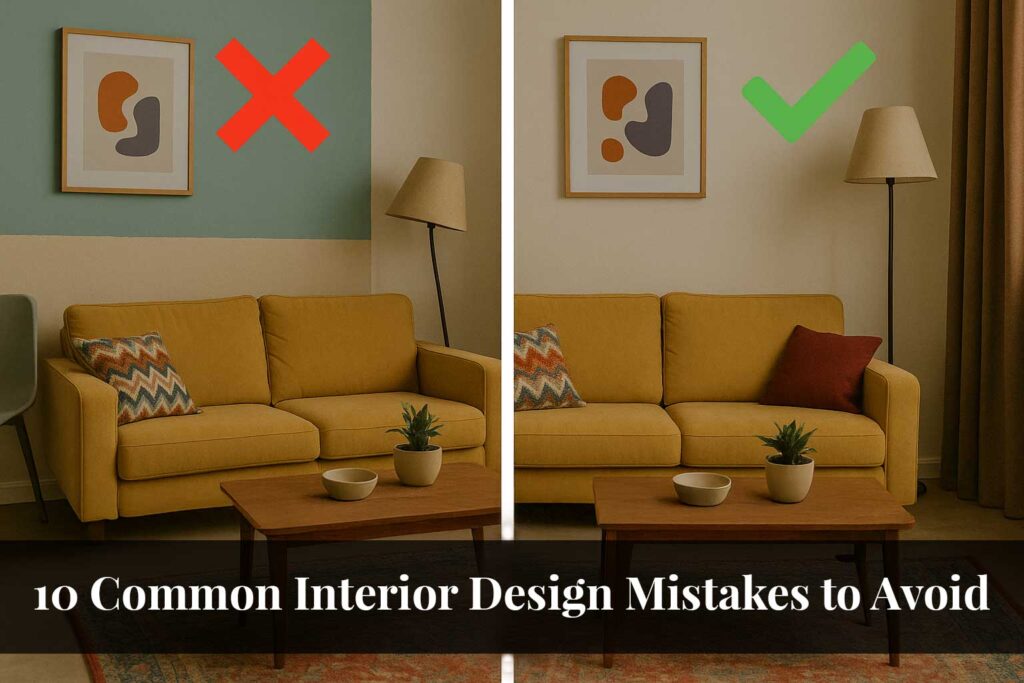
It’s not just about adding pretty things to an interior; it’s also about creating a space that feels natural, balanced, and truly yours. However, numerous individuals unintentionally make minor design errors that gradually disrupt the harmony of their home. The good news? These mistakes are easy to fix once you know what to look for. The most common interior design mistakes that can change how your home looks and feels in general are listed below.
1. Filling the Space Too Full Sometimes: we fall in love with too many pieces—extra chairs, oversized sofas, side tables everywhere. But even the most expensive furniture can look cluttered in a room that doesn’t have enough room to breathe. Good interiors need balance, not bulk.
- Poor choices for lighting: One single tube light or a bright white bulb can make the room feel flat and harsh. Layered lighting, such as soft lamps, warm ceiling lights, and tasteful spotlights, gives the room depth and warmth. Lighting is not just functional; it sets the mood of your home.
- Choosing the Wrong Colours:
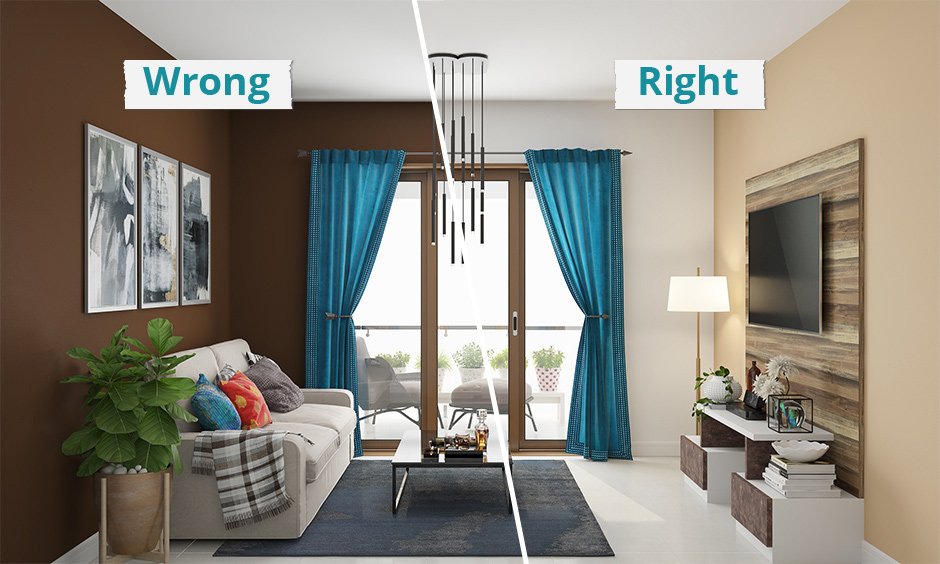
A common error is to choose colors haphazardly without a strategy. Dark shades in a small room can make it look even smaller, while too many bold colours compete with each other. A simple, coordinated colour palette always creates a calm and cohesive look. - Ignoring Wall Art & Decor:
A room that has no walls feels unfinished. However, excessive decoration is just as distracting. Choose a few meaningful pieces—art, mirrors, frames—that highlight your space rather than clutter it. - Incorrect scale for furniture: A large sofa in a small space or a small coffee table in a large hallway can completely alter the proportions. Always measure your space before making any purchases, and select furniture that is appropriate for the size of the room.
- Too many styles at once: Trying boho, minimalism, traditional, and luxury all in one room makes the space look confused. Blending styles is fine, but it has to feel intentional. Select a single central theme and incorporate small elements from various styles.
- Ignoring Needs for Storage: Pretty interiors without practical storage quickly turn into chaotic spaces. Your house will always look clean and tidy thanks to well-designed cabinets, open shelves, and drawers that are hidden.
- First A beautiful room that doesn’t support your daily lifestyle becomes a burden. Aesthetics aren’t as important as walkway space, comfortable seating, plug points, or usability.
- Wrong Curtain Choices
The flow of the room can be disrupted by curtains that are either too short, too thin, or not matched to the colors of the walls. Full-length curtains in neutral tones instantly make rooms feel taller and more elegant. - Rushing the Process
Designing an interior takes time. Rarely does it work to buy everything in one day or exactly replicate a Pinterest image. Build your house slowly, one piece at a time, so it feels like home and has meaning.
How to Avoid These Interior Designs Mistakes for a Balanced Space:
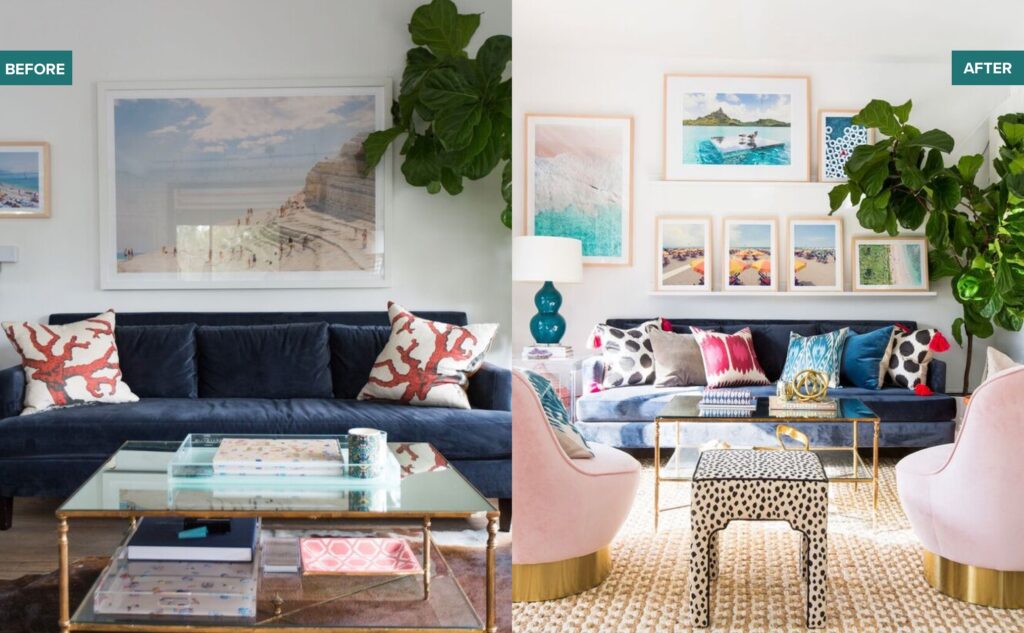
Creating a balanced, comfortable home isn’t about following strict design rules — it’s about understanding what truly works for your lifestyle. Many people make insignificant interior design mistakes without realizing it, and these insignificant choices gradually disrupt the space’s harmony. The good news? Most of these interior design mistakes are easy to fix once you know what to look out for.
The first step is to pay attention to proportion. A large sofa in a small living room or a smattering of small decorative items can immediately throw off balance. Your home should feel open, not cluttered, so choose furniture that fits the size of the room and leave some breathing space around it. Another common area where people slip is lighting. A single tube light or ceiling light won’t give your room the warmth it deserves. Use a variety of lighting sources, such as soft lamps, warm ceiling lights, and focused task lights, to create a lively and inviting atmosphere at any time of day. Colors are also important. Using too many shades or picking very bold colors for every corner can make the room feel chaotic. Instead, stick to a simple color scheme and use cushions, rugs, or wall art to add contrast. This way your home looks stylish without feeling overwhelming.
Finally, don’t put anything against the walls. Adding plants to unused corners, moving furniture slightly forward, or placing a rug to define a zone can instantly make the room feel more balanced and well-organized. In a nutshell, thoughtful choices, not expensive decor, are what create a balanced space. The design will naturally fall into place if you concentrate on what makes your home feel open, calm, and truly “you.”
Conclusion:
Avoiding interior design mistakes isn’t about being perfect — it’s about paying attention to what truly makes your home feel comfortable, balanced, and personal. Most people go wrong with small things like wrong furniture size, poor lighting, or cluttered décor, but these are all easy to fix once you know what to look for. When you choose pieces that fit your space, use colours wisely, and keep the layout practical, your home naturally feels more inviting.
At the end of the day, good design is not about trends — it’s about creating a space that supports the way you live. Take a little time to understand your home, trust your instincts, and make thoughtful choices. Your space will not only look better but also feel calmer, warmer, and more “you.”